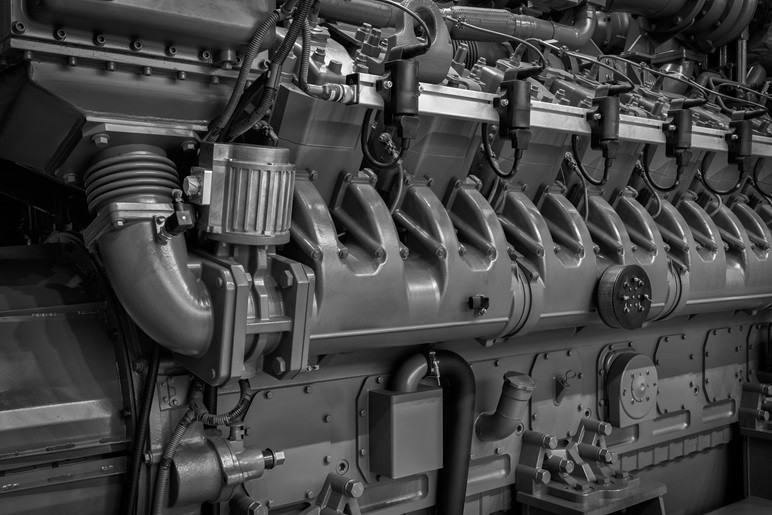
Combustion engines with changing fuels
Over the last decade, the large engine manufacturing industry has undergone tremendous change. The main reason for this are the increasingly strict requirements for environmental friendliness and economic efficiency of combustion engines. These two aspects must complement each other while keeping pace with the latest technological developments.
Therefore, questions about which fuels are available today and in the future, where they can be used, and how long they will remain viable are crucial for current developments and products.
Diesel oil, or simply diesel, remains the primary fuel for a wide range of engine applications, including ship propulsion, railway propulsion, decentralized stationary power plants, emergency power generators, construction and mining machinery, trucks, tractors, and many others. Nevertheless, alternatives are emerging.
In light of growing concerns about climate change, companies, institutions, and legislators are increasingly searching for alternatives to diesel in both transportation and energy generation applications. However, when selecting alternative fuels, emission reduction should not be the only consideration. A number of other important factors must also be taken into account.
Why was diesel that popular and what has changed
Diesel has been the fuel of choice for decades, and for good reason. It is relatively inexpensive, widely available, and has a very high energy density. Diesel engines are reliable, durable, and require relatively little maintenance. Refueling is also simple, as the necessary infrastructure has long been established and is available almost everywhere.
However, diesel is a fossil fuel produced from crude oil and releases greenhouse gases when burned. Exhaust emissions include NOx (nitrogen oxides), CO₂ (carbon dioxide), and particulate matter (fine dust), all of which have negative effects on air quality and the climate. For this reason, regulations governing the use of diesel are becoming increasingly strict in countries around the world.
Renewable diesel and its pros and cons
Hydrotreated vegetable oil (HVO), also known as “renewable diesel,” is produced from vegetable oils as well as animal fats and oils. It can be used in certain diesel engines without any modifications and serves as a “drop-in” replacement for conventional diesel, offering almost the same performance.
“Drop-in” means that the fuel can be used immediately without requiring changes on the engine.
The net CO₂ emissions of HVO are typically about 70% lower than those of fossil diesel fuel, depending on how the fuel is produced and distributed. Since the crops used to produce HVO absorb carbon while growing, the exhaust emissions are generally cleaner than those from conventional diesel.
However, combustion temperatures in the engine can be slightly higher, which may faster lead to carbon deposits as well as increased engine wear. Further, HVO is still more expensive than conventional diesel, especially in the absence of government subsidies and incentives. In addition, the use of HVO may be limited by the availability of raw materials. Finally, the question of whether it is appropriate to use food resources for fuel production has not yet been conclusively resolved.
Biodiesel: beneficial blending with diesel
Biodiesel is a renewable fuel produced through the esterification of fats such as vegetable oils, animal fats, or used cooking oil—the same feedstocks that can also be used to produce HVO. It is most commonly blended with fossil diesel fuel in order to reduce net CO₂ emissions and other pollutants.
There are blends with varying proportions of biodiesel. B20 blends, which contain 20% biodiesel, are already available today and represent a balanced compromise between cost and emissions. In most cases, B20 can be used in modern engines without any modifications.
Higher biodiesel blends are less commonly used directly as transportation fuels because they may require engine modifications, can cause compatibility issues with certain materials, and may lead to some storage challenges.
Are there any viable alternatives to diesel, HVO or Biodiesel?
Already many years ago, it was found, that Biodiesel and HVO are not fully unproblematic substitutes for diesel. In the next blog issue, we will look into other potential diesel substitutes and discuss its pros, cons and future potentials in large combustion engines.
Concept and author: Kuno Jung
Technical review: Erich Vogt
© copyright 2026, DUAP AG, Switzerland