Battery-powered car ferries
The environmental policy debate of recent decades has accelerated the search for alternative, climate-friendly propulsion systems and fuels in applications involving large engines, such as ocean-going vessels and stationary power plants. The crisis in Iran and the blockade of the Strait of Hormuz are giving the issue further momentum.
Where economically viable and technically feasible, electric solutions are the primary focus.
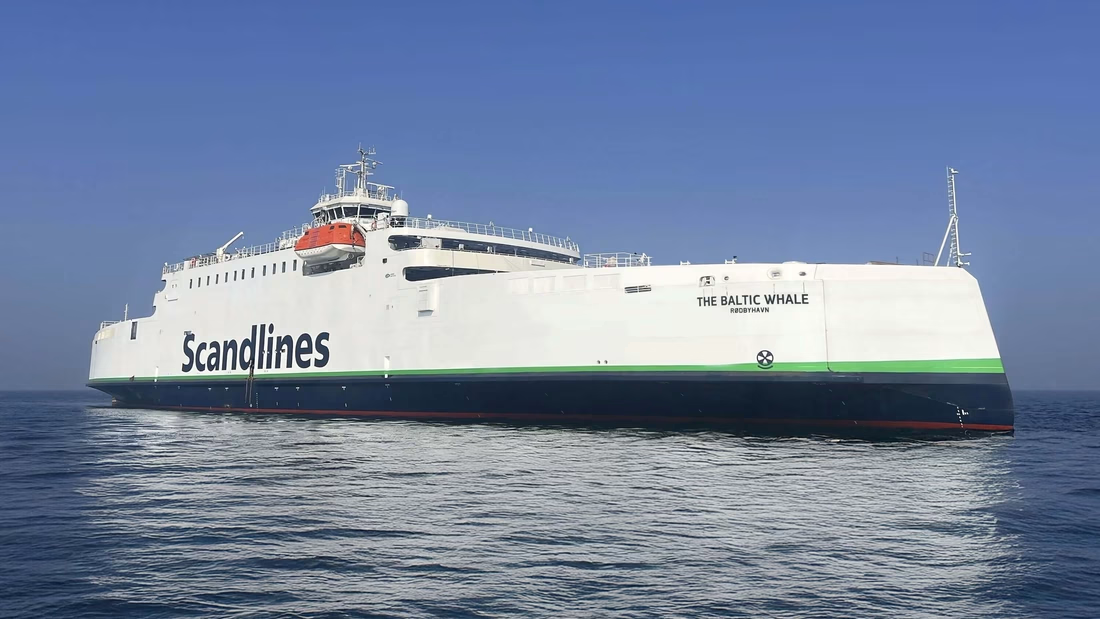
For ferries that cover relatively short distances and regularly dock in port to recharge their batteries—in addition to loading vehicles and cargo—a battery-based propulsion system makes sense. One example is the China Zorrilla ferry from an Australian manufacturer, which connects cities in Argentina and Uruguay (https://www.shippax.com/en/news/incat-launched-china-zorrilla-the-worlds-largest-battery-electric-ship.aspx). Further examples can be found in Scandinavia.
For other applications, such as land-based power plants for energy supply on islands and in remote regions or for the propulsion of ocean-going vessels, manufacturers and operators continue to rely on internal combustion engines. To operate these more sustainably in the future, the focus here is on the search for alternative fuels to the commonly used heavy fuel oil and diesel fuels.
There are two categories: lower-carbon fuels and carbon-free fuels. Depending on their source, carbon-free fuels enable net-zero operation of an internal combustion engine. Examples include green hydrogen or ammonia. Lower-carbon fuels, such as natural gas or methanol, enable a reduction in CO₂ emissions but do not allow for net-zero operation.
Fuel cells for remote areas
A hybrid between battery-powered propulsion and an internal combustion engine is fuel cell-based propulsion. In this case, electricity is generated via an electrochemical process within the fuel cell. This electricity, in turn, charges a battery and powers an electric motor. Hydrogen is typically used as the fuel. Fuel cells are used in ferries, inland waterway vessels, submarines, and combined heat and power plants. Fuel cells have the advantage of producing both electricity and heat. Combined heat and power plants make sense for supplying smaller amounts of electricity and meeting heating needs. In ocean-going vessels, this propulsion method will see little use due to the relatively high costs and the need for high-purity hydrogen. The same applies when the primary focus is on larger amounts of electricity. Overall, however, the efficiency of fuel cells is higher than that of an internal combustion engine using the same fuel.
Natural gas instead of heavy fuel oil
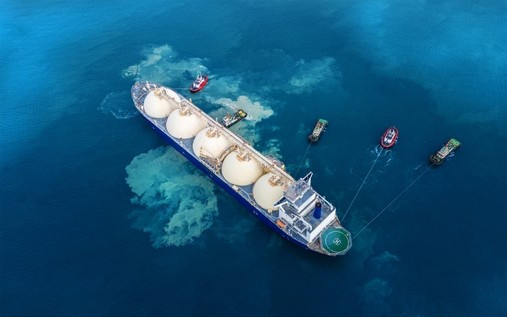
In the large internal combustion engines used in shipping, the primary fuels are still predominantly heavy fuel oil and diesel. When burned, these fuels produce not only CO₂ but also large amounts of sulphur dioxide (SO₂), nitrogen oxides (NOx), and soot particles. Natural gas has been the most commonly used alternative fuel in this sector for decades. Modern natural gas engines deliver nearly the same power as diesel engines but have lower CO₂ emissions and produce significantly fewer NOx and soot particle emissions. Natural gas consists primarily of methane and is usually stored in tanks in liquid form (LNG). Although natural gas-powered engines are more expensive to purchase, their use is particularly worthwhile in continuous operation, as natural gas is cheaper per unit of energy than diesel. Heavy fuel oil, a by-product of refining diesel and gasoline, presents a different picture. Heavy fuel oil is 30–50% cheaper than diesel and thus also significantly cheaper than natural gas. Accordingly, most large ocean-going vessels still use heavy fuel oil (HFO) today. The combustion of HFO produces large amounts of soot, SO₂, and other environmental toxins. To comply with stricter regulations near the coast or in ports (IMO 2020), exhaust treatment systems or so-called dual-fuel engines are necessary. The latter can be operated with two different fuels, for example with diesel on the open sea and with natural gas near the coast or in port, similar to a car engine that can run on either diesel or gasoline.
Natural Gas Injectors and Ignition Systems from DUAP
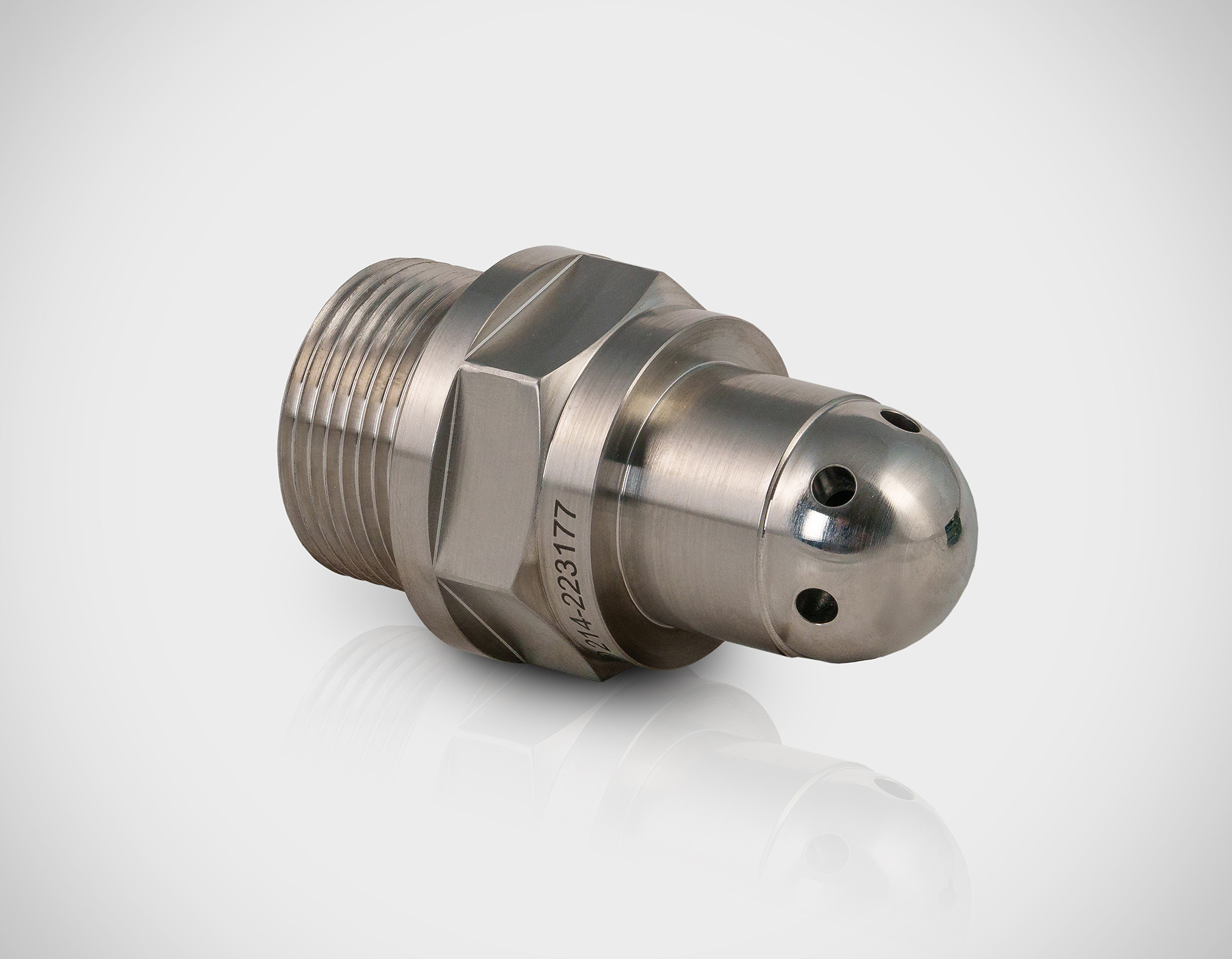
In recent years, DUAP has developed various systems and products that enable more environmentally friendly operation of large engines. For natural gas-powered large engines, DUAP manufactures complete gas injectors or injector components such as gas prechambers and gas jet ignitions systems. These products are technically complex, as they must meet very high requirements regarding combustion physics, ignition stability, and precise fuel metering. The gas injection components are subjected to extremely high continuous thermal loads. It is crucial that the engine-specific sizing and design of the injection components are optimally coordinated and that the manufacturing process is executed with the highest precision. Our company, DUAP, has the capability to offer a fully functional system from a single source, including all key components: development, production, and service throughout the entire service life of the engine.
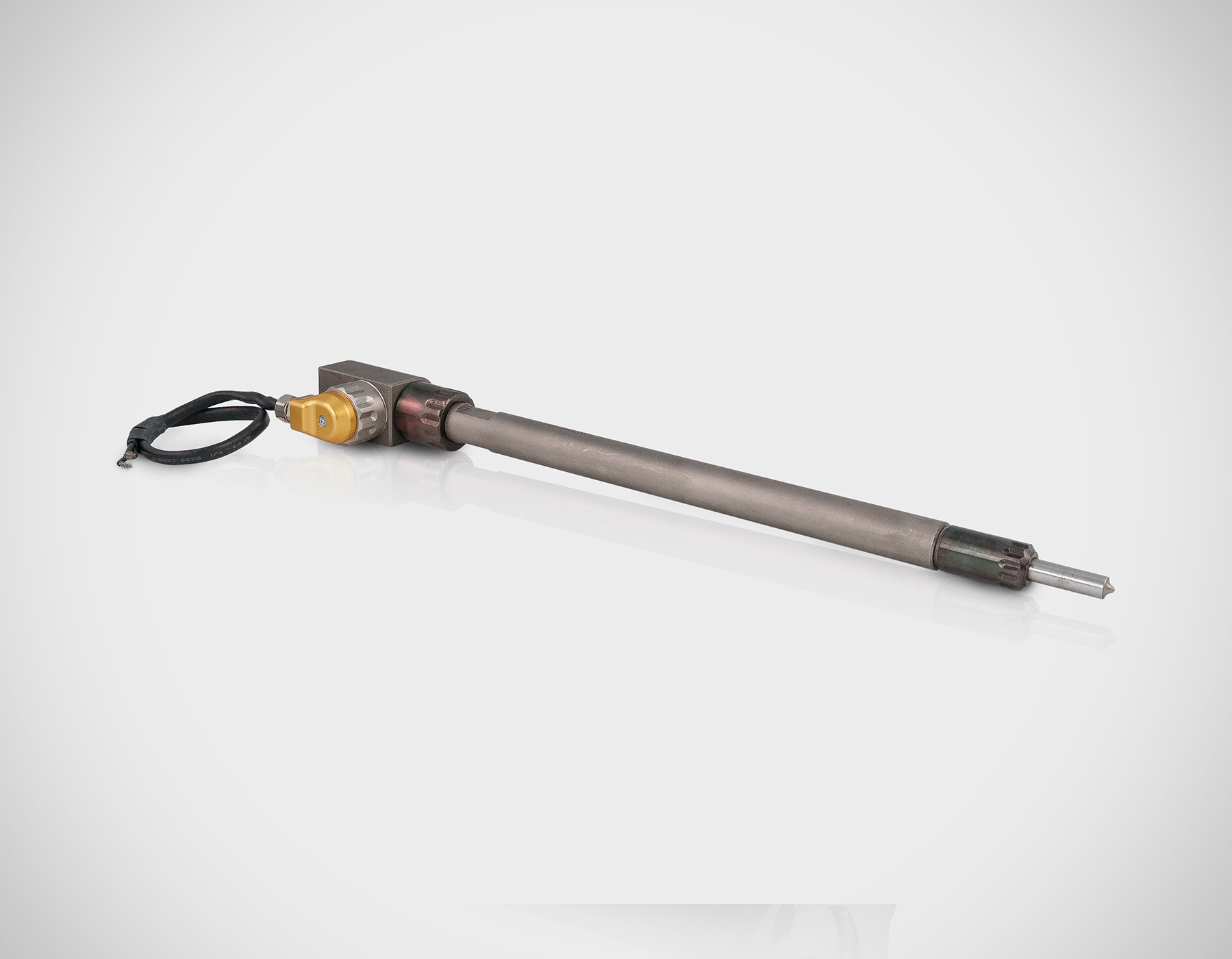
Since natural gas does not self-ignite in the cylinder like diesel does, and since natural gas is a relatively difficult-to-ignite gas, an ignition aid is required in the combustion chamber. In smaller engines, this is a spark plug; in larger engines, a small amount of diesel or biodiesel has proven effective as an ignition aid, in what is known as a Micro Pilot Ignition system (MPI). The micro-pilot is injected into the cylinder via a MPI system, in parallel with the natural gas. Diesel is self-igniting and ignites during compression in the combustion chamber, simultaneously with the actual fuel, natural gas. DUAP has developed its own Common Rail (CR) MPI system (CR-MPI) for new-build engines and retrofit systems. Under high pressure, the diesel micro-pilot is injected into the engine cylinders via a separate pump, high-pressure line and injector system, in parallel with the natural gas. Thanks to this ignition system, countless ocean-going vessels, decentralized power plant engines and dual-fuel applications worldwide are able to use natural gas as fuel, thereby reducing emissions by significant amounts every day.
Our next blog posts will explore other alternative fuels such as methanol, ammonia, and hydrogen; the latter two fuels even enable net-zero operation of an internal combustion engine. These fuels, therefore, have a significantly better environmental footprint than natural gas, which is thus merely a transitional solution. The use of hydrogen and similar fuels in large engines is still largely a distant prospect today, as it places very high demands on technology and materials. But what will be used tomorrow is being developed today by engineers and technicians at engine manufacturers around the globe. And we at DUAP are pleased that we, too, are able to make a small—but perhaps decisive—contribution in this field.
We hope you enjoyed this article on the use of natural gas in large engines and look forward to receiving your topic suggestions, feedback, or questions.
Concept and author: Kuno Jung
Technical review: Erich Vogt
© copyright 2026, DUAP AG, Switzerland